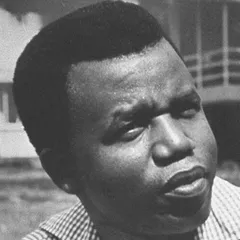
Chinua Achebe
Nigerian · 1930–2013 · Novelist and essayist
Portrait: Carlo Bavagnoli, Public domain, via Wikimedia Commons
A Nigerian novelist who wrote Things Fall Apart to show Igbo life on its own terms, before and during the arrival of British rule.
Why read Chinua Achebe?
Things Fall Apart follows Okonkwo, a proud and driven man in the Igbo village of Umuofia in the late nineteenth century, as his own fears and the arrival of missionaries and colonial officers break his world apart. Achebe spends most of the book on ordinary village life, its farming, courts, marriages, and festivals, so that you know what is being lost before it goes. His English is plain and full of Igbo proverbs, which carry much of the characters’ reasoning. On the last page the point of view shifts to a British officer, and the gap between the story you have just read and the one he plans to write is the book’s argument.
A life in six dates
- 1930Born in Ogidi, in southeastern Nigeria
- 1953Graduates from University College, Ibadan
- 1958Publishes Things Fall Apart
- 1960Nigeria becomes independent, and Achebe publishes No Longer at Ease
- 1967Supports the breakaway state of Biafra through the Nigerian Civil War, which lasts until 1970
- 1975Criticizes the racism of Joseph Conrad’s Heart of Darkness in a lecture at the University of Massachusetts Amherst
- 2013Dies in Boston