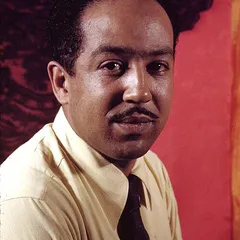
Langston Hughes
American · 1901–1967 · Poet, novelist, and playwright
Portrait: Carl Van Vechten, Public domain, via Wikimedia Commons
A Harlem Renaissance poet who built poems from blues and jazz rhythms and wrote about everyday Black American life in its own voices.
Why read Langston Hughes?
The Negro Speaks of Rivers, which Hughes wrote as a teenager, links Black history to the great rivers of the world, from the Euphrates and the Nile to the Mississippi. Mother to Son is a mother’s advice to her son, spoken in her own voice, and I, Too, often read as an answer to Walt Whitman, makes a calm claim to an equal place at the American table. The Weary Blues sets a blues musician’s late-night song inside the poem, and Dream Variations imagines a day of freedom in open sunlight. Read them aloud, because Hughes wrote for the ear and the rhythm is part of the argument.
A life in six dates
- 1901Born in Joplin, Missouri
- 1921The Crisis publishes The Negro Speaks of Rivers
- 1926Publishes The Weary Blues, his first book of poems
- 1929Graduates from Lincoln University in Pennsylvania
- 1930Publishes his first novel, Not Without Laughter
- 1951Publishes Montage of a Dream Deferred, including the poem Harlem that later gives A Raisin in the Sun its title
- 1967Dies in New York