Meet the Author
Phillis Wheatley
West African-born American · c. 1753–1784 · Poet
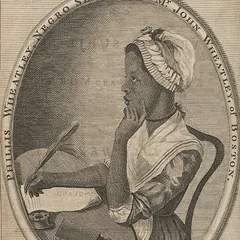
Portrait: Phillis Wheatley (author), Public domain, via Wikimedia Commons
Kidnapped from West Africa as a child and enslaved in Boston, she became the first African American woman to publish a book of poems.
1 StoryBites Edition1 Poem
Why read Phillis Wheatley?
Wheatley wrote polished neoclassical verse at a time when many white readers doubted that an enslaved African could write poetry at all. On Being Brought from Africa to America is only eight lines long, yet it moves from gratitude to a pointed warning to Christians who scorn her race. Read it closely, since its careful wording has been read as both pious and quietly defiant.
A life in six dates
- c. 1753Born in West Africa
- 1761Brought to Boston on a slave ship and bought by the Wheatley family
- 1770Wins wide notice with an elegy for the preacher George Whitefield
- 1773Travels to London, where her Poems on Various Subjects, including On Being Brought from Africa to America, is published
- c. 1773Freed from slavery around the time of her return from London
- 1778Marries John Peters
- 1784Dies in Boston
Themes across the work
The StoryBites Editions
Context that actually matters
Slavery in colonial New EnglandSlavery was legal in Massachusetts when Wheatley arrived, and she lived as an enslaved servant in a Boston household.
The attestationHer book opened with a statement signed by prominent Boston men, including John Hancock, confirming that she had written the poems.
Neoclassical poetryWheatley wrote in heroic couplets in the manner of Alexander Pope, the leading style of 18th-century English verse.