Meet the Author
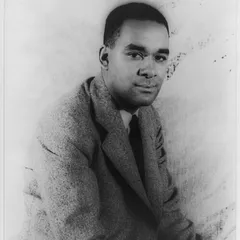
Richard Wright
American · 1908–1960 · Novelist, memoirist, and essayist
Portrait: Carl Van Vechten, Public domain, via Wikimedia Commons
A Mississippi-born writer whose Chicago novel, Native Son, made American readers look hard at what poverty and racism make of a young man.
1 StoryBites Edition1 Big Book
Why read Richard Wright?
Native Son follows Bigger Thomas, a young Black man living with his family in one crowded room on Chicago’s South Side in the 1930s, through two killings, a manhunt, and a trial. Wright does not ask you to like Bigger. He asks you to see how fear, poverty, and a segregated city shaped him, and the courtroom section turns that question back on the society that judges him. Read it as a novel of pressure, where nearly every scene shows Bigger boxed in and asks who built the box.
A life in six dates
- 1908Born on a plantation near Natchez, Mississippi
- 1927Moves north to Chicago
- 1938Publishes Uncle Tom’s Children, a book of novellas set in the South
- 1940Publishes Native Son, a Book-of-the-Month Club selection and a bestseller
- 1941Orson Welles directs a stage version of Native Son on Broadway
- 1945Publishes Black Boy, a memoir of his Southern childhood and youth
- 1946First travels to Paris, where he soon settles for the rest of his life
- 1960Dies in Paris
Themes across the work
The StoryBites Editions
Context that actually matters
The Great MigrationMillions of Black Southerners moved to Northern cities such as Chicago in the first half of the twentieth century, Wright among them, and Native Son shows what many found there: crowded housing, low pay, and a color line drawn block by block.
Chicago’s South SideThe wealthy Dalton family who hire Bigger also own the company that rents the Thomases their single room, a detail the trial brings back into view.
NaturalismWright admired Theodore Dreiser and wrote in the naturalist tradition, which shows characters driven by forces of environment and circumstance larger than their own choices.