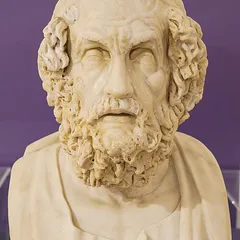
Meet the Author
Homer
Ancient Greek · c. 8th century BCE · Epic poet
Portrait: NikonZ7II, CC BY-SA 4.0, via Wikimedia Commons
The name tradition gives to the poet of the Iliad and the Odyssey, the founding epics of Western literature.
5 StoryBites Editions5 Big Books5 Full texts
Why read Homer?
Whoever Homer was, the Iliad and the Odyssey remain gripping: a war story about rage and grief, and a journey home full of monsters and disguises. Nothing certain is known about his life, and scholars still debate how the poems were composed. Read them for stories that have been retold for nearly three thousand years.
A life in six dates
- c. 8th century BCEThe Iliad and the Odyssey take shape in the Greek oral tradition
- 6th century BCEThe poems are recited at the Panathenaic festival in Athens
- 1488First printed edition of Homer, in Florence
- 1598George Chapman begins his English translation
- 1715Alexander Pope begins publishing his Iliad
Themes across the collection
The StoryBites Editions
Context that actually matters
Oral poetryThe epics grew from a tradition of singers who composed as they performed, using repeated phrases and scenes.
The Trojan WarBoth poems draw on legends of a war between Greeks and Trojans that the Greeks treated as their shared past.
The Homeric questionScholars still debate whether one poet, several, or a whole tradition produced the poems.
Influence
Echoes of Homer run through Virgil, James Joyce, Madeline Miller, among many others.